Kuru: The Story of the Laughing Sickness
 In the annals of medical history, few diseases are as strange and tragic as Kuru. Confined to a remote tribe in the highlands of New Guinea, this fatal neurological disorder mystified scientists for decades. Its story is not just one of disease, but of culture, discovery, and the unveiling of an entirely new class of infectious agent. Known colloquially as the "laughing sickness," Kuru's legacy extends far beyond the isolated mountains where it emerged, fundamentally changing our understanding of brain diseases like Alzheimer's and Parkinson's.
This post explores the fascinating history of Kuru, from its origins in a unique cultural practice to the groundbreaking research that unraveled its secrets and earned a Nobel Prize. We will delve into its causes, devastating symptoms, and the crucial lessons it taught the world about the mysterious agents known as prions.
In the annals of medical history, few diseases are as strange and tragic as Kuru. Confined to a remote tribe in the highlands of New Guinea, this fatal neurological disorder mystified scientists for decades. Its story is not just one of disease, but of culture, discovery, and the unveiling of an entirely new class of infectious agent. Known colloquially as the "laughing sickness," Kuru's legacy extends far beyond the isolated mountains where it emerged, fundamentally changing our understanding of brain diseases like Alzheimer's and Parkinson's.
This post explores the fascinating history of Kuru, from its origins in a unique cultural practice to the groundbreaking research that unraveled its secrets and earned a Nobel Prize. We will delve into its causes, devastating symptoms, and the crucial lessons it taught the world about the mysterious agents known as prions.
What Exactly Is Kuru Disease?
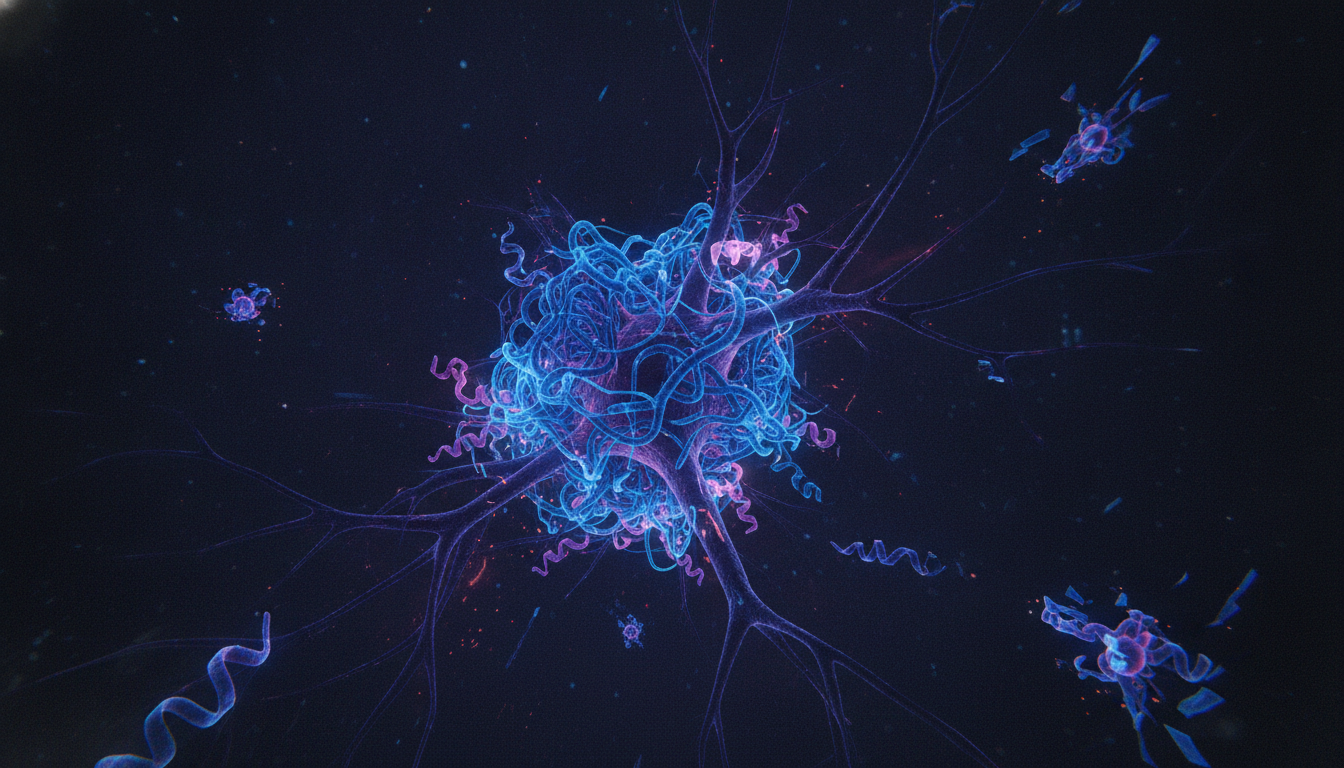
Kuru is a rare, incurable, and fatal neurodegenerative disorder. It belongs to a family of diseases known as transmissible spongiform encephalopathies (TSEs), so named because they leave the brain riddled with microscopic, sponge-like holes. Unlike illnesses caused by bacteria, viruses, or fungi, Kuru is a prion disease. This distinction is critical and represents a paradigm shift in medical science. Prions are not living organisms. They are misfolded proteins that have the uncanny ability to trigger a chain reaction, causing normally folded proteins in the brain to adopt their same abnormal shape. As these rogue prions accumulate, they form clumps, or plaques, that disrupt neural function, destroy brain cells, and lead to the characteristic "spongy" brain tissue seen in post-mortem examinations. This process is slow but relentless, causing progressive neurological and physical decline. The study of prions has provided crucial insights into other neurodegenerative conditions, and research into brain health, such as The MIND Diet for lowering Alzheimer's risk, is part of the broader effort to protect the brain from such damaging processes. The name "Kuru" originates from the Fore language of the people affected, meaning "to shiver" or "trembling in fear." This name is a chillingly accurate description of the body tremors and loss of motor control that are the disease's hallmark symptoms.The Origin: How Kuru Was Transmitted Among the Fore People
 The story of Kuru is inextricably linked to the Fore people of the Eastern Highlands of Papua New Guinea. For generations, Kuru was an endemic epidemic within this isolated community, and for a long time, its cause was a complete mystery. Scientists initially suspected a genetic link or a slow-acting virus, but the pattern of infection didn't quite fit.
The breakthrough came when researchers linked the disease's transmission to a specific cultural practice: endocannibalism. As a sign of love, respect, and mourning, the Fore people would ritually consume their deceased relatives. This practice was believed to pass on the wisdom and strength of the dead to the living. However, it also passed on the deadly prions responsible for Kuru.
The story of Kuru is inextricably linked to the Fore people of the Eastern Highlands of Papua New Guinea. For generations, Kuru was an endemic epidemic within this isolated community, and for a long time, its cause was a complete mystery. Scientists initially suspected a genetic link or a slow-acting virus, but the pattern of infection didn't quite fit.
The breakthrough came when researchers linked the disease's transmission to a specific cultural practice: endocannibalism. As a sign of love, respect, and mourning, the Fore people would ritually consume their deceased relatives. This practice was believed to pass on the wisdom and strength of the dead to the living. However, it also passed on the deadly prions responsible for Kuru.
The practice of mortuary feasts was central to the Fore belief system, meant to honor the dead and maintain a spiritual connection with them. Tragically, this profound act of mourning became the very vector for a devastating epidemic.The incidence of Kuru was not evenly distributed. It predominantly affected women and children, a fact that puzzled early investigators. The reason was rooted in the social customs of the mortuary feasts. Men, who were often warriors, typically consumed the muscle tissue of the deceased. Women and children, on the other hand, were given the brain—the organ with the highest concentration of infectious prions. This led to a catastrophic imbalance, with Kuru becoming the leading cause of death among Fore women in the mid-20th century, at one point killing up to 2% of the population annually. The epidemic peaked in the 1950s and 1960s. After Australian authorities, who administered the territory, discouraged and eventually helped end the practice of endocannibalism, the incidence of Kuru began a slow but steady decline. It was a powerful, if tragic, demonstration of how cultural practices can have profound epidemiological consequences.
The Devastating Symptoms and Stages of Kuru
One of the most terrifying aspects of Kuru is its incredibly long incubation period. An individual could be infected with the prion for years, or even decades—in some cases up to 50 years—before showing any signs of the disease. Once symptoms manifest, however, the progression is rapid and merciless, typically leading to death within a year. The disease unfolds in three distinct stages.-
Stage One: The Ambulatory Stage
The initial signs are subtle. The individual develops an unsteady gait (ataxia), difficulty balancing, and tremors. They may experience slurred speech and a general loss of muscle coordination. While these symptoms are concerning, the person can still walk and function, albeit with increasing difficulty. This loss of motor control, while different in origin, shares some superficial similarities with symptoms seen in other neurological issues, such as those caused by conditions like spinal stenosis that affect nerve pathways. -
Stage Two: The Sedentary Stage
In the second stage, the victim can no longer walk without support. The tremors become more severe and widespread, and muscle jerks (myoclonus) become more frequent. It is during this stage that the disease's infamous nickname, "the laughing sickness," becomes apparent. Victims experience emotional instability and pathological bursts of uncontrollable, спорадиc laughter, a chilling symptom that is not a sign of amusement but a result of profound neurological damage. -
Stage Three: The Terminal Stage
In the final stage, the deterioration is complete. The individual is bedridden, unable to sit up without support. They develop severe ataxia, incontinence, and dysphagia (difficulty swallowing). They lose the ability to speak. Death is often the result of secondary complications like starvation, malnutrition, or pneumonia, as the body's most basic functions fail.
Diagnosis, Treatment, and Prevention
 To this day, there is no cure or effective treatment for Kuru. Once symptoms begin, the disease is universally fatal. Medical care is purely palliative, focused on providing comfort and managing the distressing symptoms. Diagnosing Kuru in a living patient is also a challenge. It relies on neurological examinations, a review of the patient's history (specifically their connection to the Fore community), and ruling out other neurological disorders.
A definitive diagnosis can only be made through a post-mortem examination of the brain tissue. Under a microscope, the brain of a Kuru victim reveals the tell-tale sponge-like holes, neuronal loss, and the aggregation of prion protein plaques that confirm the disease.
To this day, there is no cure or effective treatment for Kuru. Once symptoms begin, the disease is universally fatal. Medical care is purely palliative, focused on providing comfort and managing the distressing symptoms. Diagnosing Kuru in a living patient is also a challenge. It relies on neurological examinations, a review of the patient's history (specifically their connection to the Fore community), and ruling out other neurological disorders.
A definitive diagnosis can only be made through a post-mortem examination of the brain tissue. Under a microscope, the brain of a Kuru victim reveals the tell-tale sponge-like holes, neuronal loss, and the aggregation of prion protein plaques that confirm the disease.
Prevention: The Only Solution
The story of Kuru's eradication is a testament to the power of public health intervention. The disease was not conquered by a wonder drug or a vaccine, but by a change in cultural practice. When the Fore people, with the encouragement of outside authorities, ceased the ritual of endocannibalism in the late 1950s, the chain of transmission was broken. Because the disease had no other way to spread, the number of new cases plummeted. The last known Kuru patient died in 2005, and the disease is now considered to be virtually extinct.The Lasting Legacy of Kuru Research
While the story of Kuru is a human tragedy, its study yielded some of the most important medical discoveries of the 20th century. The research, spearheaded by Dr. Carleton Gajdusek, who won the Nobel Prize in Physiology or Medicine in 1976 for his work, forever changed our understanding of infectious disease.- Discovery of Prions: Kuru research led to the identification and characterization of prions, a new class of infectious agent composed solely of protein. This concept was revolutionary, as it defied the long-held belief that all infectious agents must contain genetic material like DNA or RNA.
- Understanding TSEs: The study of Kuru provided the key to understanding other spongiform encephalopathies. Scientists realized that Kuru, Creutzfeldt-Jakob Disease (CJD) in humans, Scrapie in sheep, and Bovine Spongiform Encephalopathy (BSE, or "Mad Cow Disease") were all caused by the same underlying prion mechanism.
- Insights into Neurodegeneration: The process of protein misfolding and aggregation seen in Kuru is now recognized as a central feature of many common neurodegenerative diseases, including Alzheimer's, Parkinson's, and ALS. While these diseases are not typically infectious, the study of prions has provided valuable models for how protein-related brain damage can occur.
Share this content:
Discover more from J and J Health
Subscribe to get the latest posts sent to your email.