
Can You Really Out-Exercise a Bad Diet?
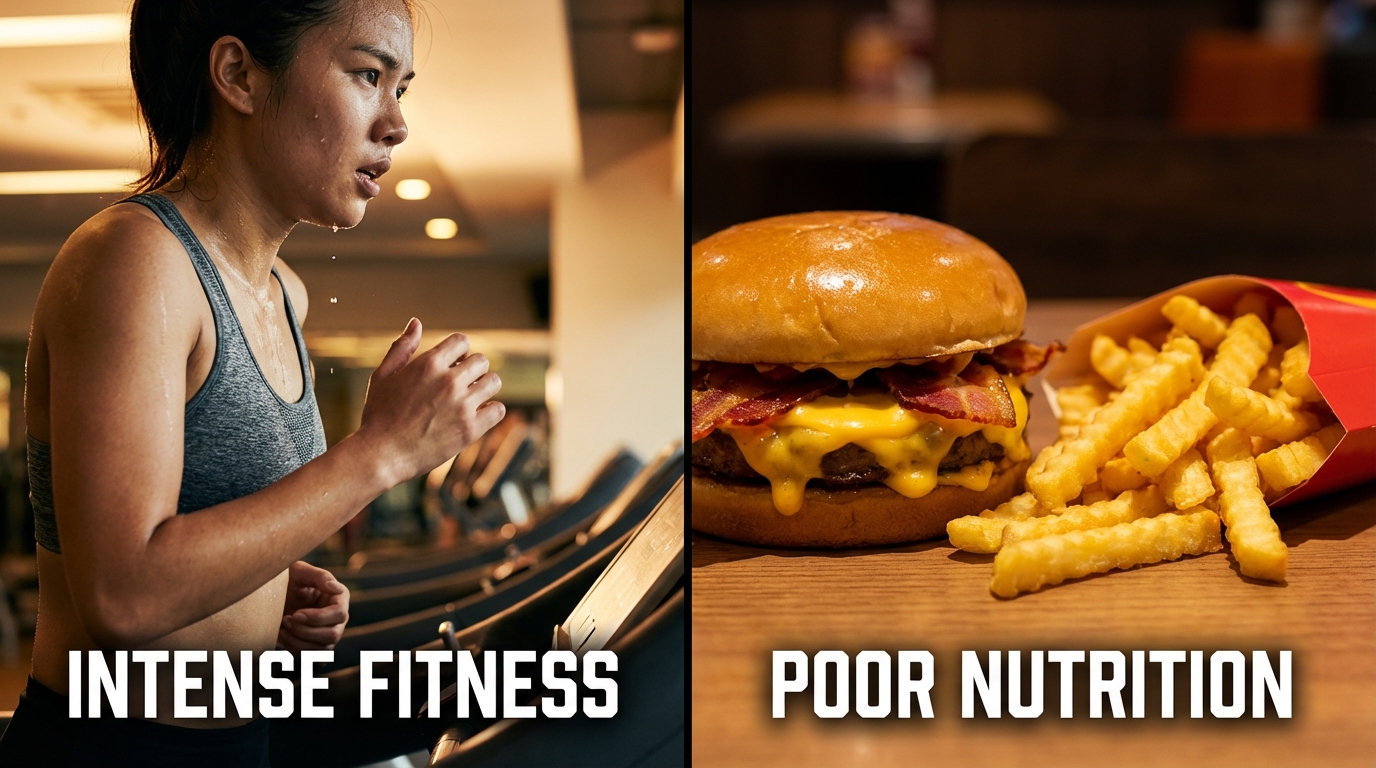
We have all been there. You just finished a grueling, sweat-drenched hour on the treadmill. Your smartwatch congratulates you on burning 600 calories, and as you walk out of the gym, a thought creeps into your mind: "I earned a burger and fries today." It is one of the most common psychological traps in the fitness world. We subconsciously view exercise as a currency we can spend on junk food.
But uncovering the hard truth about weight loss, nutrition, and human biology reveals a stark reality: spending hours on the treadmill might not be enough to reach your goals if your nutrition remains unchecked. The idea that you can simply offset poor dietary choices with more physical activity is not just flawed—it is mathematically and biologically impossible for the vast majority of people.

If you have been working out consistently but the scale refuses to budge, or worse, your body composition is moving in the wrong direction, it is time to look away from the weights and toward your plate. Let us dive into why you cannot out-train a bad diet, and what you actually need to do to see sustainable, long-term weight loss.
The Simple Math: Calories In vs. Calories Out
At its absolute core, weight loss is governed by the laws of thermodynamics, specifically the energy balance equation. To lose weight, you must be in a caloric deficit, meaning you consume fewer calories than your body burns in a day. While this sounds incredibly straightforward, human behavior makes it infinitely complex.
The fatal flaw in trying to out-exercise a bad diet lies in the sheer asymmetry of how quickly we can consume calories versus how long it takes to burn them. Let us look at a practical example. A blended caramel coffee drink from a popular chain can easily contain 500 to 600 calories. You can drink this in roughly five minutes while sitting in your car.
To burn off those exact same 500 calories, a 150-pound person would need to run at a vigorous pace for about 45 to 50 minutes. If you add a donut to that coffee order, you are looking at another 300 calories, which equates to an additional 30 minutes of running. You can consume a day's worth of calories in a single sitting, but you cannot physically exercise for 10 hours a day to burn it off.
One of the most destructive habits in fitness is viewing food as a reward for exercise. When you tell yourself you "earned" a treat because you worked out, you almost always overestimate the calories burned and underestimate the calories consumed. This cycle keeps you trapped in a perpetual plateau.
This mathematical reality is why so many people fall victim to common fat loss myths. They believe the hour they spent in the gym gives them a free pass for the remaining 23 hours of the day. But your workout only makes up a small fraction of your Total Daily Energy Expenditure (TDEE). Even for avid gym-goers, the calories burned during exercise rarely exceed 10-15% of their total daily burn.
Beyond Calories: How Junk Food Sabotages Your Body
If weight loss were purely a math equation, eating 1,500 calories of fast food would yield the same results as eating 1,500 calories of chicken, broccoli, and sweet potatoes. But the human body is not a simple calculator; it is a complex biological engine driven by hormones, enzymes, and chemical signals.
When you consume a diet high in processed sugars, refined carbohydrates, and unhealthy trans fats, you trigger a cascade of hormonal responses that actively fight against your weight loss efforts. The primary culprit here is insulin.
The Role of Insulin and Fat Storage
Insulin is a hormone responsible for regulating your blood sugar. When you eat a highly processed meal, your blood sugar spikes dramatically. In response, your pancreas pumps out massive amounts of insulin to shuttle that sugar out of your bloodstream. Here is the problem: insulin is a fat-storage hormone. When insulin levels are highly elevated, your body essentially turns off its fat-burning mechanisms and shifts into fat-storage mode.
If you are constantly grazing on sugary snacks or processed carbs, your insulin levels never get a chance to drop. Consequently, your body remains locked out of its own fat stores, no matter how hard you push yourself during your evening spin class.

Brain Hijacking and Systemic Inflammation
Furthermore, highly processed foods are engineered to hijack your brain's reward centers. They lack the fiber, protein, and water content found in whole foods, meaning they do not trigger the stretch receptors in your stomach that signal fullness. You can consume thousands of calories of chips or ice cream and still feel physically hungry an hour later.
A bad diet also leads to chronic, systemic inflammation. When your body is inflamed, it struggles to recover from the physical stress of exercise. Instead of building lean muscle—which naturally boosts your resting metabolism—your body is busy fighting the inflammatory response caused by poor food choices. This is a major factor in understanding metabolic adaptation, where your body stubbornly refuses to drop fat despite intense workouts.
The 80/20 Rule: Why Abs Are Made in the Kitchen
You have likely heard the fitness adage: "Weight loss is 80% diet and 20% exercise." While exact percentages vary from person to person, the underlying principle is universally accepted by top fitness experts, dietitians, and scientists.
Why is the ratio so heavily skewed toward nutrition? Because you have absolute control over what you put into your mouth, but you have very limited control over how many calories your body naturally burns. You can easily cut 500 calories from your daily diet by swapping soda for water and reducing portion sizes. Attempting to force your body to burn an extra 500 calories every single day through exercise alone is exhausting, time-consuming, and highly prone to injury.
"Exercise is the architect of your body's shape, but nutrition is the builder. You can draw up the most beautiful blueprints in the gym, but if you don't supply the right materials in the kitchen, the house will never be built."
This does not mean exercise is useless—far from it. However, we need to reframe our understanding of *why* we exercise. Exercise is primarily for:
- Cardiovascular Health: Strengthening your heart and lungs, reducing the risk of chronic diseases.
- Mental Wellbeing: Releasing endorphins, managing stress, and improving sleep quality.
- Muscle Retention and Growth: Ensuring that the weight you lose comes from fat, not from metabolically active muscle tissue.
Nutrition, on the other hand, is the primary driver for actual fat loss and leaning out. If you want a smaller number on the scale, fix your diet. If you want to look good and feel strong at that new weight, go to the gym.
How to Properly Balance Nutrition and Fitness
So, if we cannot out-exercise a bad diet, what is the solution? The answer lies in synergy. You need to align your kitchen habits with your gym habits so they are working toward the same goal, rather than fighting against each other. Understanding the importance of a balanced diet is the first step toward lasting change.

1. Focus on Nutrient-Dense Whole Foods
Shift your focus away from counting every single calorie and toward food quality. Prioritize lean proteins (chicken, fish, tofu), abundant vegetables, complex carbohydrates (oats, sweet potatoes, quinoa), and healthy fats (avocados, nuts, olive oil). Whole foods naturally regulate your appetite, stabilize your blood sugar, and provide the essential vitamins your body needs to recover from workouts.
2. Stop Using Exercise as Punishment
One of the most vital mindset shifts you can make is to stop viewing the gym as a place to burn off your dietary sins. When you eat a heavy meal, do not run to the treadmill to "work it off." Instead, accept it, move on, and use the extra energy to fuel a fantastic, strength-building workout the next day. Exercise should be a celebration of what your body can do, not a punishment for what you ate.
3. Create a Sustainable Lifestyle
Extreme diets and two-hour daily workouts are a recipe for burnout. The best diet and exercise plan is the one you can stick to for the next five years. Aim for a moderate caloric deficit (around 300-500 calories less than your maintenance level) and a realistic workout schedule of 3 to 4 days a week. Developing a balanced approach to fitness ensures you stay consistent, and consistency is the only magic pill that actually works.
You don't have to be perfect. Aim to get 80% of your calories from whole, unprocessed, nutrient-dense foods. Leave the remaining 20% for the foods you love—whether that's a slice of pizza or a piece of chocolate. This prevents psychological restriction and binge-eating, making your diet sustainable for the long haul.
Ready to Fix Your Diet and Accelerate Your Results?
Stop wasting hours in the gym with nothing to show for it. You now know the truth: you cannot out-train a bad diet. It is time to start building a balanced, sustainable nutrition plan today to finally reach your weight loss goals.
Start Your Nutrition Journey TodayShare this content:
Discover more from J and J Health
Subscribe to get the latest posts sent to your email.


