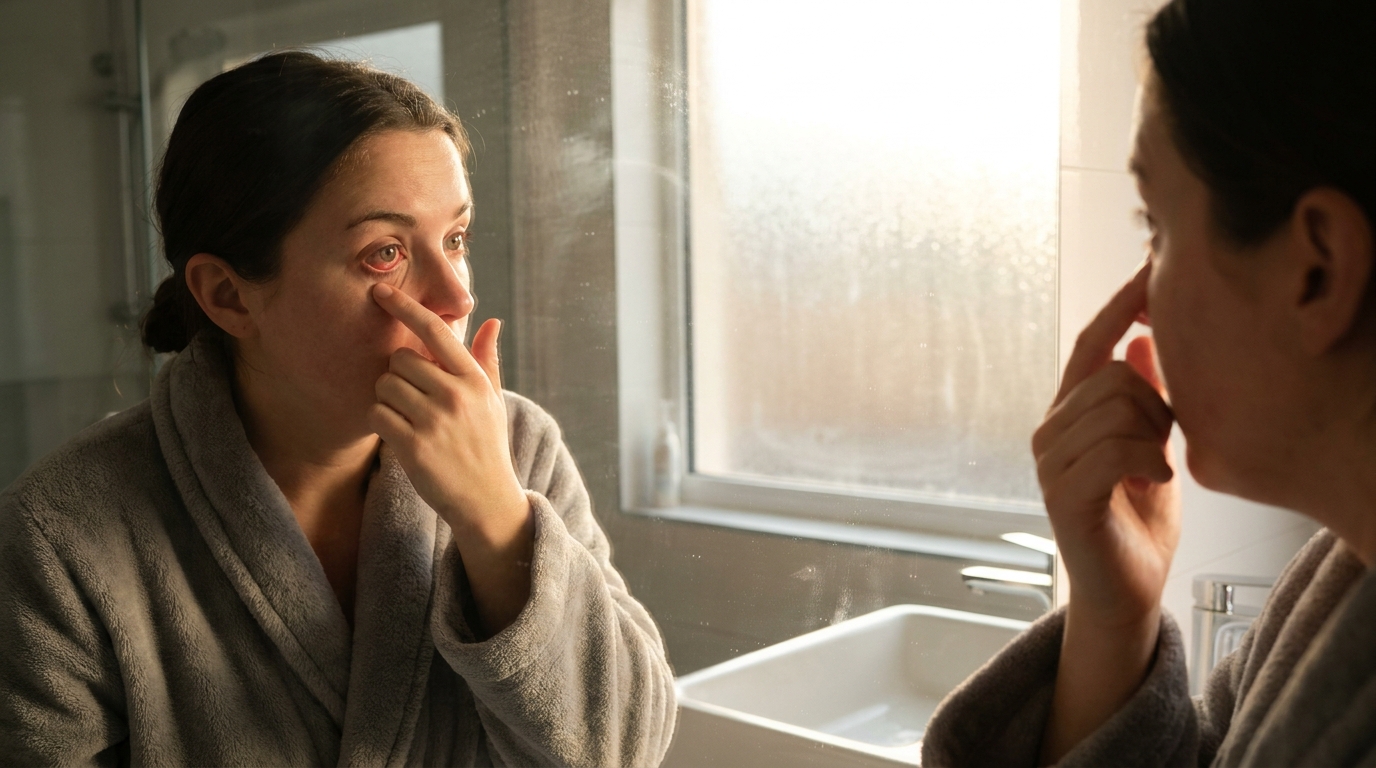
Why Are Your Eyes Red When You Wake Up? Causes and Solutions
You stretch, yawn, and make your way to the bathroom to start your day. But when you look in the mirror, you are greeted by a startling sight: your eyes are completely bloodshot. Waking up with red, irritated eyes is a surprisingly common morning phenomenon, yet it often leaves people wondering what went wrong during the night. After all, sleep is supposed to be restorative, so why do your eyes look like they just worked a double shift?
The truth is that your eyes undergo significant physiological changes while you sleep. From the way your eyelids rest to the environment in your bedroom, numerous factors can conspire to irritate the delicate conjunctiva—the clear membrane covering the white part of your eye. When this membrane becomes irritated, its tiny blood vessels dilate and swell, resulting in the unmistakable pink or red appearance we associate with bloodshot eyes.
In this comprehensive guide, we will uncover the surprising reasons behind morning bloodshot eyes and explore actionable, science-backed solutions to help you wake up with clear, refreshed, and comfortable vision.

The Role of Dry Eyes and Sleeping with Your Eyes Open
One of the most frequent culprits behind morning eye redness is a condition known as nocturnal lagophthalmos. This medical term simply refers to the inability to close your eyelids completely while you sleep. Even a tiny gap of a millimeter or two is enough to expose the surface of your eye to the surrounding air for eight continuous hours.
To understand why this is so problematic, we have to look at how the eye naturally defends itself. During waking hours, every blink spreads a complex, three-layer tear film across the cornea. This film contains mucus to anchor the tears, water for hydration, and lipids (oils) to prevent evaporation. However, during sleep, your basal tear production naturally decreases. Your body assumes your eyes will be safely sealed shut behind your eyelids, rendering constant tear production unnecessary.
If your eyelids are even slightly parted, that compromised tear film quickly evaporates. This leads to severe overnight desiccation (drying out). The surface of the eye becomes inflamed, prompting blood vessels to engorge in an attempt to deliver healing nutrients to the irritated tissue. By morning, your eyes are uncomfortably dry, gritty, and glaringly red.
This issue is heavily exacerbated by your bedroom environment. Sleeping directly under a spinning ceiling fan or near an active air conditioning vent creates a constant draft that accelerates tear evaporation. If you frequently wake up feeling exhausted despite getting enough hours of rest, it may be worth examining your sleep environment as a whole. In fact, chronic morning grogginess can sometimes point to deeper issues; if you suffer from constant morning fatigue, your heart might be signaling hidden stress or a sleep disorder that is disrupting your restorative rest.

Dust Mites and Bedroom Allergens
If your red eyes are accompanied by itchiness, puffiness, or a watery discharge, your bedding might be harboring microscopic invaders. Your mattress and pillows are the perfect environment for dust mites—microscopic arachnids that thrive in warm, humid environments and feed on the dead skin cells we naturally shed while we sleep.
It isn't the dust mites themselves that cause the redness, but rather their waste products, which are highly allergenic. When you lay your head on your pillow, you are pressing your face directly into these allergens for hours at a time. If you sleep with pets in your bed, you are also adding a heavy concentration of pet dander to the mix.
"Allergic conjunctivitis is a leading cause of morning eye redness. During the night, continuous exposure to pillow allergens triggers the immune system to release histamine, causing the eye's blood vessels to rapidly dilate and swell."
This histamine release is an inflammatory response designed to flush out the offending allergens. Unfortunately, it leaves you waking up looking like you spent the night crying. The blood vessels in the sclera (the white of the eye) become prominent, and the surrounding eyelid tissue often appears swollen and dark.
Late-Night Screen Time and Digital Eye Strain
Our modern bedtime routines are wreaking havoc on our ocular health. For many, the final hour before sleep is spent scrolling through social media, reading on a tablet, or watching videos on a smartphone in a dark room. This habit is a massive contributor to morning eye redness through a phenomenon known as digital eye strain.
When we stare at digital screens, our blink rate drops dramatically. Humans normally blink about 15 to 20 times per minute, but when engaged with a screen, that rate plummets by up to 66%. This dramatically reduces the distribution of tears across the eye, leading to localized dry spots and micro-abrasions on the cornea.
Furthermore, the intense blue light emitted by these devices forces the ciliary muscles inside the eye to work overtime to maintain focus, especially when the screen is the only source of light in a dark room. This leads to severe eye fatigue. While you might finally put the phone down and go to sleep, the residual inflammation and strain don't instantly vanish. The blood vessels remain dilated throughout the night as the eye attempts to repair the micro-damage, leaving you with red eyes the next morning.
Instead of scrolling before bed, consider adopting a screen-free wind-down routine. Learning how to use breathing techniques for relaxation can help you transition into sleep much more effectively, giving both your mind and your eyes the restorative break they desperately need.

Lifestyle Factors: Contacts, Alcohol, and Sleep Apnea
Sometimes, the cause of your morning red eyes isn't related to the mechanics of sleep, but rather your lifestyle choices and underlying health conditions.
Sleeping in Contact Lenses
Accidentally falling asleep with your contact lenses in is one of the fastest ways to guarantee red, irritated eyes in the morning. The cornea receives its oxygen directly from the air, not from blood vessels. When you sleep, the closed eyelid already reduces oxygen flow. Adding a plastic lens over the cornea creates a hypoxic (low oxygen) environment. The eye responds by rapidly growing new blood vessels and expanding existing ones to desperately seek oxygen, causing severe redness. Worse, sleeping in contacts increases your risk of a corneal ulcer or severe bacterial infection by tenfold.
Alcohol Consumption
Having a few drinks before bed affects your body systemically. Alcohol is a powerful diuretic, meaning it forces your body to expel water, leading to systemic dehydration. Because the eyes require a constant supply of hydration to maintain the tear film, this dehydration heavily impacts ocular comfort. If you are curious about how alcohol affects your body's systems over time, understanding how long it takes to detox from alcohol can shed light on its lingering physiological effects, including chronic dry eye.
Sleep Apnea and Floppy Eyelid Syndrome
There is a highly documented, yet little-known, connection between Obstructive Sleep Apnea (OSA) and a condition called Floppy Eyelid Syndrome (FES). People with FES have eyelids that are unusually lax and rubbery. During the night, as they toss and turn or sleep face-down, the loose upper eyelid can spontaneously flip inside out, exposing the delicate inner conjunctiva directly to the pillowcase. This causes immense friction and drying, resulting in severe redness and mucus discharge upon waking.
How to Prevent and Treat Morning Red Eyes
Fortunately, waking up with bloodshot eyes doesn't have to be your permanent reality. By implementing a few targeted changes to your nighttime routine, you can protect your ocular health and wake up looking refreshed.
- Use Preservative-Free Eye Drops: Apply a high-quality, preservative-free lubricating eye drop or a thicker overnight eye gel right before you close your eyes. This provides a protective barrier of moisture that lasts throughout the night.
- Optimize Your Airflow: Turn off ceiling fans or redirect AC vents so they do not blow air directly across your face while you sleep.
- Run a Bedroom Humidifier: Adding moisture back into the air with a cool-mist humidifier prevents the ambient air from pulling moisture out of your eyes and skin.
- Allergen-Proof Your Bedding: Wash your sheets and pillowcases weekly in hot water to kill dust mites. Consider investing in hypoallergenic mattress and pillow encasements.
- Practice the 20-20-20 Rule: If you must use screens at night, take a break every 20 minutes to look at something 20 feet away for 20 seconds, and consciously force yourself to blink fully.
To banish morning red eyes, establish a "wind-down protocol" 30 minutes before bed: remove your contact lenses, put away all digital screens, turn on your humidifier, and apply a drop of preservative-free artificial tears. This simple combination addresses the three main causes of morning redness: eye strain, dryness, and environmental air quality.
When to See an Eye Doctor
While occasional morning redness is usually a benign nuisance caused by dryness or mild allergies, it is crucial to know when to seek professional help. If your red eyes are accompanied by deep, aching pain, a thick yellow or green discharge, extreme sensitivity to light (photophobia), or any sudden changes in your vision (such as blurriness that doesn't clear up after blinking), it's time to consult an optometrist or ophthalmologist immediately.
These symptoms can indicate a more serious condition, such as a corneal infection, conjunctivitis (pink eye), or uveitis, which requires prescription medication to resolve. Don't gamble with your eyesight—schedule a comprehensive eye exam today to protect your vision and ensure your eyes stay as healthy as they look.
Share this content:
Discover more from J and J Health
Subscribe to get the latest posts sent to your email.