The Glowing Myth: Are Tanning Beds a Safe Way to Tan?
Many seek a sun-kissed look year-round, but the convenience of tanning beds comes with serious, scientifically-proven health risks. We're conditioned to associate a golden tan with health, vitality, and beauty. But when that glow comes from a machine, what is the true cost? Let's uncover the uncomfortable truth behind the artificial bronze.

What Really Happens to Your Skin in a Tanning Bed?
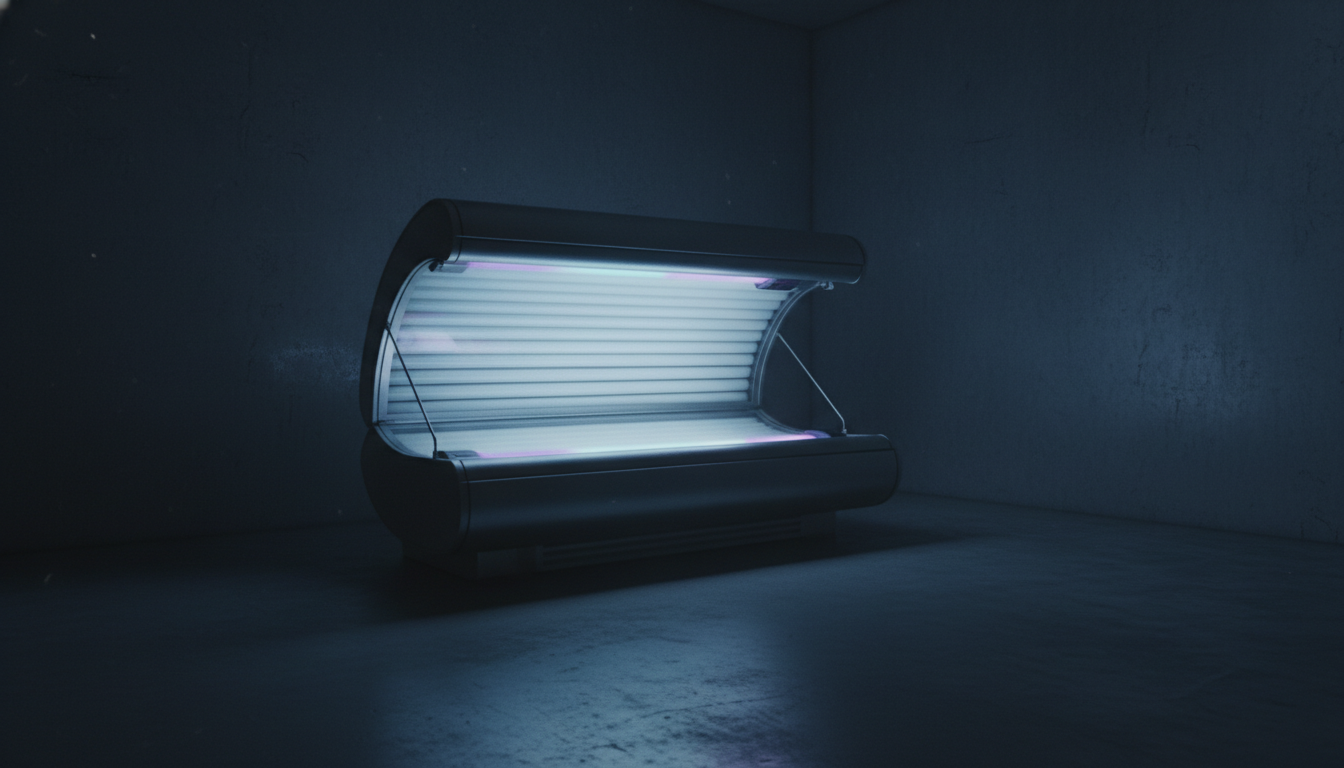
To understand the dangers, we must first look at the mechanism. Tanning beds are not gentle sunbaths; they are concentrated sources of ultraviolet (UV) radiation. They primarily emit UVA rays, which are distinct from the UVB rays that cause sunburn. While you might not feel the immediate burn, UVA rays penetrate deeper into the skin's dermis layer, where they wreak silent havoc on your cells.
A tan is not a sign of health—it's your skin's trauma response. When exposed to UV radiation, your skin cells (melanocytes) produce more melanin in a desperate attempt to shield the cell's nucleus and its precious DNA from further damage. That bronze color is a literal shield, a sign that your skin has been injured and is trying to protect itself from more harm. The UV radiation from a typical tanning bed can be up to 15 times more intense than the midday sun, delivering a massive, unnatural dose of harmful rays in a very short period.
- Collagen and Elastin Breakdown: The deep-penetrating UVA rays rapidly degrade collagen and elastin, the essential proteins that provide skin with its structure, firmness, and elasticity. This leads directly to premature aging, including fine lines, deep wrinkles, and a leathery skin texture.
- DNA Damage: Every tanning session causes cumulative DNA damage within your skin cells. While the body has repair mechanisms, they aren't perfect. Over time, these mutations can accumulate, leading to uncontrolled cell growth—the very definition of cancer.
- Immune System Suppression: UV radiation can suppress the skin's immune functions, making it harder for your body to fight off infections and detect and destroy cancerous cells in their earliest stages.
Protecting your skin's integrity is a cornerstone of holistic health. While avoiding UV damage is paramount, other practices contribute to overall wellness. Exploring things like the benefits of sauna use for overall wellness can be part of a broader strategy to care for your body from the inside out.

The Unmistakable Link: Tanning Beds and Skin Cancer
The scientific consensus on the link between indoor tanning and skin cancer is unequivocal. There is no debate among dermatologists, oncologists, or global health organizations. The evidence is overwhelming and has led to strict regulations and warnings worldwide.
The World Health Organization's International Agency for Research on Cancer (IARC) classifies ultraviolet (UV)-emitting tanning devices as Group 1 carcinogens. This is the highest-risk category, placing tanning beds alongside substances like tobacco, asbestos, and plutonium as definitively cancer-causing to humans.
The statistics are sobering. According to the Skin Cancer Foundation, using an indoor tanning bed before the age of 35 increases your risk of developing melanoma by a staggering 75%. Melanoma is the most dangerous form of skin cancer due to its ability to spread rapidly to other organs if not caught early. But the danger doesn't stop there. Regular use also dramatically elevates the risk of developing basal cell carcinoma and squamous cell carcinoma, the two most common types of skin cancer.
The damage is cumulative. Each session in a tanning bed is like adding another ticket to a lottery you never want to win. The risk compounds over a lifetime, meaning the tanning habits of your youth can have devastating consequences decades later. This reinforces the importance of being proactive about your health. Understanding and acting on these warnings is crucial, just as it is in other areas of health awareness, like recognizing the signs of other cancers. Personal stories, like those of individuals diagnosed with two different types of breast cancer, underscore the critical role of vigilance and prevention. There are many proven ways to reduce your cancer risk naturally, and avoiding UV tanning beds is one of the most impactful choices you can make.
Common Indoor Tanning Myths, Debunked
The indoor tanning industry has long promoted misinformation to downplay the risks. It's time to separate fact from fiction and address these dangerous myths head-on.
Myth: "Getting a 'base tan' protects you from sunburn on vacation."
Fact: This is one of the most pervasive and harmful myths. A so-called "base tan" offers a minuscule amount of protection, equivalent to a sun protection factor (SPF) of only 3 or 4. This is nowhere near the recommended SPF 30 or higher needed for adequate protection. More importantly, a base tan is, by its very definition, evidence of skin damage. You are essentially pre-damaging your skin to prevent a sunburn, which is a fundamentally flawed approach to skin health.
Myth: "Tanning beds are a safe way to get Vitamin D."
Fact: Your body produces Vitamin D when exposed to UVB radiation. However, tanning beds are engineered to emit primarily UVA rays to maximize tanning and minimize burning. Therefore, they are an inefficient and incredibly dangerous source of Vitamin D. Safer, more effective sources include a balanced diet, fortified foods, Vitamin D supplements, and very brief, incidental sun exposure on small areas of skin outside of peak hours.
Myth: "Modern tanning beds are safer than older ones."
Fact: While the technology and design of tanning beds have evolved, their fundamental mechanism has not. All tanning beds, regardless of age or marketing claims, work by emitting carcinogenic UV radiation. High-pressure beds, which use more UVA, are just as dangerous for causing melanoma and premature aging. There is no such thing as a safe UV tanning bed.
Safer Alternatives: How to Get a Healthy Glow
The desire for a golden glow doesn't have to come at the expense of your health. Thankfully, the beauty industry has developed incredible sunless tanning technologies that provide a beautiful, natural-looking tan without a single ray of UV radiation. Here’s how you can achieve that sun-kissed look safely:
Key Takeaway: The Only Safe Tan is a Sunless Tan
Embracing UV-free alternatives is the single best decision you can make for the long-term health and appearance of your skin. Sunless tanners have improved dramatically and now offer streak-free, natural-looking results without the risk of cancer or premature aging.
- Sunless Tanning Lotions, Mousses, and Sprays: These products use an active ingredient called Dihydroxyacetone (DHA), a color additive that reacts with the amino acids in the outermost layer of your skin. This reaction creates a brown color, safely mimicking a tan without UV damage. Modern formulas are streak-free, come in various shades, and often include moisturizing ingredients.
- Professional Spray Tans: For a flawless, even, and professionally applied tan for a special event or vacation, a spray tan is an excellent option. An aesthetician uses an airbrush to apply a fine mist of DHA solution, ensuring a perfect application that is completely UV-free and lasts for about a week.
- Temporary Bronzers: If you're not ready to commit to a multi-day tan, bronzing powders, gels, and liquid illuminators are fantastic. They provide an instant, temporary glow to your face and body that can be easily washed off at the end of the day.
- Prioritize Sunscreen Daily: This is the most crucial step. Whether you have a sunless tan or not, you must protect your skin every day with a broad-spectrum sunscreen of SPF 30 or higher. A sunless tan provides no protection from the sun's harmful rays.

Choose Your Health Over a Tan
The evidence is clear, consistent, and irrefutable: tanning beds are not safe. The temporary aesthetic benefit of an artificial tan is vastly outweighed by the permanent risks of premature aging, irreversible skin damage, and life-threatening skin cancer. The glowing myth of a "healthy tan" from a tanning bed has been thoroughly debunked by decades of scientific research.
By ditching indoor tanning and embracing the wide array of effective and safe sunless alternatives, you are making the best possible investment in your future. You are choosing the long-term health and beauty of your skin over a fleeting, dangerous bronze. Your skin is your body's largest organ—protect it, cherish it, and let its natural radiance shine through, safely.
Share this content:
Discover more from J and J Health
Subscribe to get the latest posts sent to your email.