
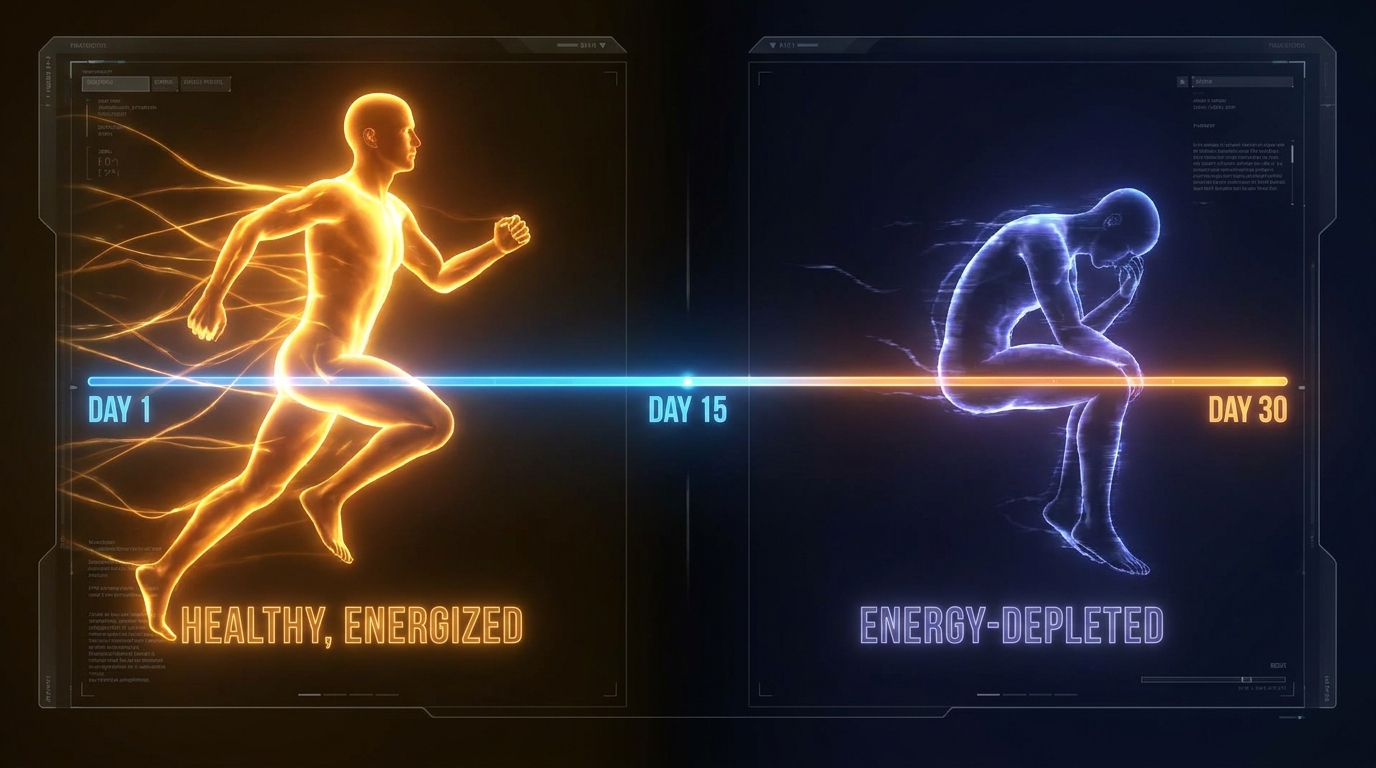
The Biological Timeline: What Happens When You Stop Eating?
From the first hunger pangs to deep ketosis and eventual starvation, your body undergoes extreme adaptations when deprived of food for multiple days.

Food is the fundamental fuel that powers every cellular process in the human body. From the beating of your heart to the firing of neurons in your brain, constant energy is required to sustain life. But what happens when that fuel supply is suddenly cut off?
Whether through intentional practices like prolonged fasting, or tragic circumstances like famine and being stranded without resources, the human body is equipped with an ancient, evolutionary survival mechanism designed to keep you alive when food is scarce. This biological timeline is a marvel of physiological engineering, shifting your metabolism through distinct phases to prioritize the survival of your most vital organs.
In this comprehensive guide, we will walk through the exact biological timeline of what happens to your body when you stop eating for multiple days—from the initial drop in blood sugar to the dangerous reality of true starvation.
Phase 1: Glycogen Depletion (0-24 Hours)
The moment you finish your last meal, a biological clock starts ticking. For the first few hours, your body is in the "fed" state, busily digesting food, absorbing nutrients, and using glucose (sugar) as its primary energy source. However, as the hours pass, this external energy supply dwindles.
The Hormonal Shift
Within the first 4 to 8 hours of not eating, your blood sugar levels begin to drop. In response, your pancreas secretes a hormone called glucagon, while simultaneously halting the production of insulin. Glucagon acts as a biological messenger, telling your body that it needs to find energy from internal storage.
Your body immediately turns to its glycogen stores. Glycogen is simply a stored form of glucose, primarily packed away in your liver and your skeletal muscles. Because liver health is vital for maintaining these energy reserves, a healthy liver will efficiently release this stored glucose back into your bloodstream to maintain normal energy levels and ensure your brain continues to function optimally.
The Hunger Pangs Begin
As your glycogen depletes, typically around the 12-to-18-hour mark, you will likely experience intense hunger pangs. This is driven by ghrelin, often called the "hunger hormone." Your stomach secretes ghrelin to remind your brain that it is time to eat. During this window, you may notice:
- Irritability and mood swings (the classic "hangry" feeling).
- A noticeable drop in physical and mental energy.
- Stomach growling and physical emptiness.
- Rapid water weight loss, as every gram of stored glycogen holds about 3 grams of water.
By the 24-hour mark, most of your liver's glycogen reserves are completely exhausted. Your body has officially run out of its preferred, easy-to-access fuel. It is now forced into a major metabolic shift to survive.
Phase 2: Entering Ketosis (24-72 Hours)

With no glucose left to burn, the body must find an alternative fuel source, particularly for the brain, which demands a massive amount of energy (roughly 20% of your daily caloric expenditure) but cannot directly use fat for fuel.
The Rise of Ketones
To solve this energy crisis, your liver kicks into overdrive. It begins a process called lipolysis, breaking down stored body fat (triglycerides) into fatty acids. These fatty acids are then converted by the liver into water-soluble molecules called ketones (specifically beta-hydroxybutyrate, acetoacetate, and acetone).
Unlike fatty acids, ketones can easily cross the blood-brain barrier. This metabolic shift into ketosis is an evolutionary masterpiece. It is the reason why humans could survive through long, brutal winters without food. In fact, many individuals who practice intermittent fasting report experiencing significant mental clarity and focus once their brain transitions to running efficiently on ketones.
The Disappearance of Hunger
One of the most fascinating phenomena during this phase is the suppression of ghrelin. Once you are deeply in ketosis (usually around day 2 or 3), your intense hunger pangs will surprisingly begin to fade. Your body realizes food is not coming and adapts by shutting down the chemical signals for hunger, allowing you to focus your energy on finding resources rather than being paralyzed by stomach pain.
The "Keto Flu" Transition
While ketosis is a natural state, the transition is rarely smooth for modern humans who are accustomed to constant carbohydrate intake. During the 24-to-72-hour window, you may experience symptoms collectively known as the "keto flu." As your body rapidly flushes out water and electrolytes, you might suffer from severe headaches, fatigue, muscle cramps, and profound brain fog. During this phase, the body is rapidly burning stored fat, which is why supervised short-term fasting is sometimes utilized by medical professionals for therapeutic weight loss.
Phase 3: Autophagy and Muscle Breakdown (72 Hours to 1 Week)
If the fast continues past the three-day mark, your body enters a profound state of cellular preservation and recycling. It knows it must conserve energy and raw materials at all costs.
The Cellular Cleanup: Autophagy
Around 72 hours without food, a process called autophagy peaks. Derived from Greek words meaning "self-eating," autophagy is a cellular recycling process where your body identifies old, damaged, or malfunctioning cells and breaks them down. The usable parts are recycled to build new, healthy cells, while the toxic waste is discarded. This process is intensely studied for its potential anti-aging and disease-prevention benefits.
"Autophagy is the body's ultimate internal housekeeping system. When starved of external nutrients, the body turns inward, cleaning out cellular debris and misfolded proteins to sustain essential life functions."
Catabolism: Sacrificing Muscle for Survival
While fat continues to be the primary fuel source, the body faces a new problem: it needs amino acids. Certain biological functions, and a small portion of the brain's energy requirements, still demand glucose. To get it, the body initiates a process called gluconeogenesis, where it creates glucose from non-carbohydrate sources.
To facilitate this, the body begins breaking down muscle tissue to harvest amino acids. While it tries to spare muscle by relying heavily on fat, prolonged fasting inevitably leads to muscle wasting.
Interestingly, during this phase, your resting metabolic rate may actually increase slightly. This is due to spikes in norepinephrine and adrenaline—an evolutionary survival mechanism designed to give you the physical energy and alertness required to hunt for food. However, this artificial energy is accompanied by the onset of vitamin and mineral deficiencies, leading to potential issues with bone density, immune function, and cardiovascular stability.
Phase 4: The Danger Zone and Starvation (1 Week and Beyond)

When food deprivation extends beyond a week, the body crosses a critical threshold. It moves from a controlled, adaptive fasting state into true starvation mode. At this point, survival mechanisms begin to severely compromise long-term health.
The Triage of Vital Organs
In true starvation, the body must make grim biological choices. To protect the brain—the most vital organ for survival—the body aggressively breaks down whatever is left. Once body fat stores are critically low, the body accelerates the breakdown of vital muscle mass. It doesn't just target skeletal muscles (like your biceps or quads); it eventually targets internal organs, including the intestines, liver, and the heart muscle itself.
Immune Collapse and Organ Failure
As protein stores are decimated, the immune system becomes severely compromised. Without the raw materials to produce white blood cells and antibodies, the individual becomes highly susceptible to infections, viruses, and diseases. Even a minor infection could rapidly escalate into a life-threatening condition. In fact, understanding how severe infections can lead to sepsis is crucial, as starvation makes the body virtually defenseless against such systemic responses.
Without medical intervention, prolonged starvation leads to a cascade of catastrophic failures:
- Severe Electrolyte Imbalance: Potassium, magnesium, and sodium levels plummet, disrupting cellular communication.
- Organ Atrophy: Kidneys and liver begin to shut down due to cellular degradation.
- Cardiac Arrhythmia: As the heart muscle weakens and electrolytes fail, the heart loses its ability to maintain a steady rhythm. Ultimately, death from starvation is most typically caused by cardiac arrest.
Who Should Absolutely Avoid Prolonged Fasting?
While short-term intermittent fasting (like the 16:8 method) has proven health benefits for many healthy adults, voluntarily going multiple days without food is incredibly dangerous for certain populations. Fasting should never be used as a punishment for your diet or as a quick fix for habits that lead to unwanted overeating. It requires careful medical supervision.
The following groups should never attempt prolonged fasting:
- Pregnant or Breastfeeding Women: The nutritional demands of fetal development and milk production are immense. Depriving the body of food can cause severe developmental harm to the child.
- Children and Teenagers: Growing bodies require constant, reliable caloric and nutritional intake for proper brain and bone development.
- Individuals with Eating Disorders: Anyone with a history of anorexia, bulimia, or binge-eating disorder is at extreme risk of triggering life-threatening psychological and physical relapses.
- People with Type 1 Diabetes: Fasting can cause fatal drops in blood sugar (hypoglycemia) or dangerous levels of diabetic ketoacidosis.
- Those on Specific Medications: Many medications require food for safe absorption and to prevent severe gastrointestinal damage.
Always consult with a licensed healthcare provider before attempting any fast lasting longer than 24 hours to ensure your body can handle the metabolic stress safely.
Prioritize Your Health and Nutrition
Curious about safe fasting practices or optimizing your diet? The human body is incredibly resilient, but it thrives best on balance. Always speak with a registered dietitian or doctor to create a wellness plan that works for your unique biology, goals, and medical history.
Share this content:
Discover more from J and J Health
Subscribe to get the latest posts sent to your email.


