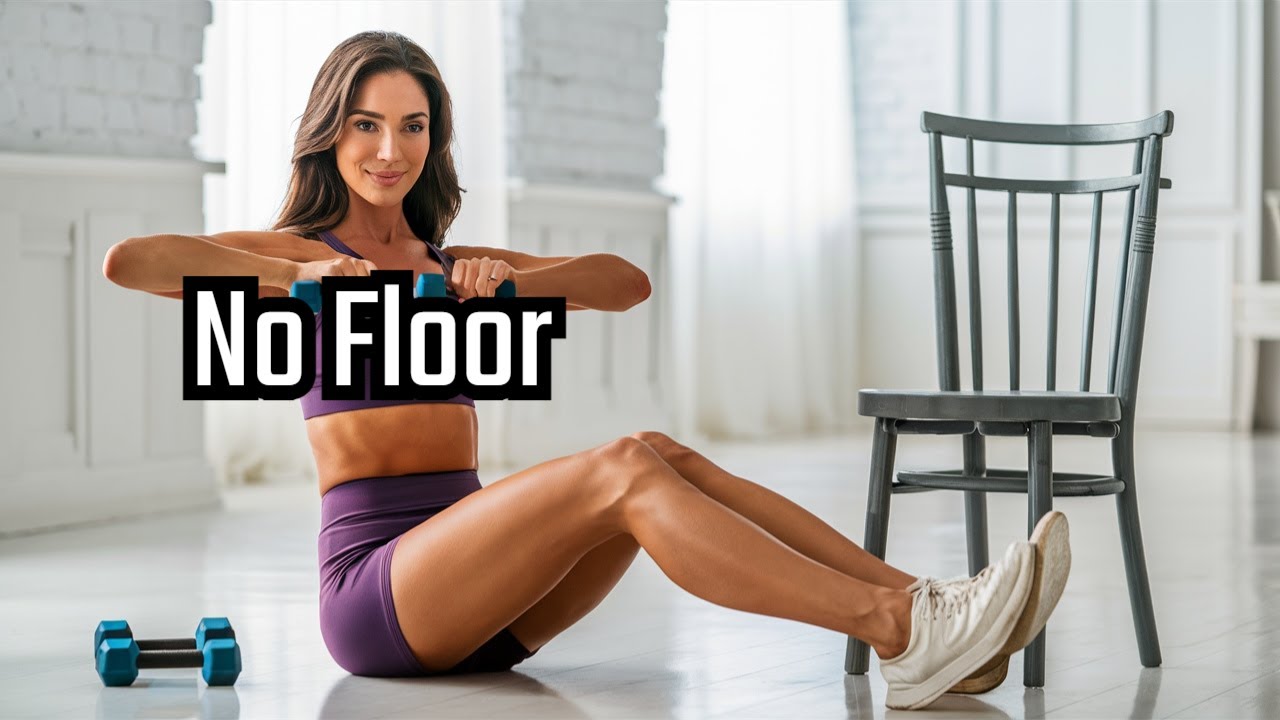
<br> Are you feeling tightness in your hips? You're not alone. Many people spend more than eight hours a day sitting, leading to tight and uncomfortable hips. But there's hope. Hip opening stretches can improve your flexibility and relieve discomfort. Let's dive into 11 effective hip opening stretches that will help you relax and move freely. First, it's essential to understand the importance of your hip muscles. They support your hip joints and allow smooth movements. Strengthening and stretching these muscles can make activities like walking and climbing stairs much easier. As you perform these stretches, work gently within your limits. Hold each position for five to eight breaths and listen to your body. If you feel any sharp pain, stop and consult a healthcare provider. Now, let's begin with some beginner hip openers.<br><br> One. Child's pose. Kneel and touch your big toes together. Sit back on your heels while reaching your arms in front and resting your forehead on the floor. Two. Butterfly stretch. Sit with the soles of your feet together. Lean forward gently to feel a stretch in your inner thighs and hips. Three. Bridge. Lie on your back, feet on the floor. Lift your hips towards the ceiling and then lower them. Repeat this for three to five reps. Four. Lying figure four stretch. Lying on your back, pull one knee across your body. This targets your outer hip and thigh. Five, couch stretch. Place one foot on a couch behind you while lunging forward with the other leg, feeling the stretch in your thighs and calves. Six. Low lunge. From standing, step your leg forward into a lunge while keeping your back knee on the ground.<br><br> Hold this position for a good stretch. Now, let's move to some intermediate hip openers. Seven. Frog stretch on your hands and knees. Widen your knees without straining. Bring your forearms down and feel the stretch. Eight. Yogi squat. Squat down with feet turned outward. Bring your palms together and press your elbows into your knees. Nine. Squat to stand. Bend forward. Then lower into a squat while holding onto your feet. Use your elbows to help open your hips. 10. Pigeon pose. From a plank position, bring one knee forward, bending it at a right angle. Lean forward for a deeper stretch. 11. Spider-Man runner's lunge. Begin in a plank. Step your foot to the inside of your hand, keeping the back leg extended. Stretching is beneficial, but it's essential to listen to your body. Expect some initial discomfort, but sharp pain should prompt a visit to a professional. In summary, these hip stretches can significantly enhance your flexibility and mobility, making daily activities easier. Remember to take things slowly, hold each pose, and breathe deeply. Ready to improve your hip flexibility? Start these stretches today for a healthier, more comfortable life.. <br><br><a href="https://www.youtube.com/watch?v=b64bUZM523I" target="_blank">As found on YouTube</a>
<br> Want to keep your joints bulletproof for life? Let's dive into the Marine's guide to lifelong agility. First up, mobility drills. Incorporate dynamic stretches to enhance flexibility and range of motion. Next, strength training. Focus on compound movements like squats and deadlifts to build joint stability. Don't forget about balance. Incorporate exercises like single leg stands to improve coordination and prevent injuries. Hydration is key. Drink plenty of water to keep your cartilage healthy and joints lubricated. Lastly, listen to your body. Rest and recovery are crucial for maintaining joint health over the years. Follow these tips and you'll be moving with agility just like a marine for a lifetime. Remember, strong joints lead to a strong life. V2.. <br><br><a href="https://www.youtube.com/watch?v=PpOsGJZv1xQ" target="_blank">As found on YouTube</a>
<br> Are you worried about knee pain while working out? You're not alone. Many people fear that exercise might worsen their knee conditions. But good news, exercising with the right approach can strengthen your knees and improve mobility. Always consult your doctor before starting any exercise routine. Could you start with warming up? A simple fiveinut ride on a stationary bike or brisk walking can prepare your muscles. You could also do wall push-ups or calf raises to get your body ready. Warming up reduces injury risk and enhances workout effectiveness. Let's look at beneficial exercises for strengthening the knees. Begin with straight leg raises.<br><br> Lie on your back. Keep one leg bent and raise the other until it's level with the bent knee. This targets your quadriceps with minimal knee strain. Repeat 10 15 times in three sets. Next, try hamstring curls. Lie on your stomach and bring your heels towards your bottom. Hold and repeat this for three sets of 15. You can gradually add ankle weights for added resistance. Move on to prone straight leg raises. Lie on your stomach. Tighten your bottom muscles and lift one leg gently towards the ceiling.<br><br> Hold briefly and lower. Repeat this for 10 to 15 times on each side. Now let's enhance the intensity with wall squats. Stand against a wall. Lower your knees slowly and hold the position for 5 to 10 seconds. If you feel discomfort, adjust your position. Calf raises are next. Face a sturdy chair or wall for support. Lift your heels as high as possible, then lower them back down. Do three sets of 10 15. When you're comfortable, try lifting one foot off the ground. You can also include step-ups into your routine. Step onto a low platform. Touch your toe briefly to the ground. Then rise back up. Repeat and switch legs. For a side leg raise, lie on your side and lift the top leg to a 45° angle. Hold. Lower briefly and repeat. This exercise strengthens your hip and thigh muscles. Leg presses are another great option. If you have access to a machine, adjust the seat and push the plate away with your feet. Aim for three sets of 10, 15. Always remember to listen to your body. Pain during exercise isn't normal.<br><br> You may feel muscle soreness, but sharp pain is a sign to stop. Check with your doctor if you experience sudden discomfort. Lastly, maintain knee friendly cardio. Gentle activities like swimming or water aerobics can be great alternatives. Always consult your doctor regarding your chosen exercises. In summary, with the right exercises and a careful approach, you can enhance your knee strength and manage pain effectively.<br><br> Don't wait. Start incorporating these exercises into your routine today.. <br><br><a href="https://www.youtube.com/watch?v=HMa6BDki8rw" target="_blank">As found on YouTube</a>
Ease Achy Joints with Simple Exercises: A Journey to Pain Relief
Join me as I take on the challenge of easing my achy joints using only simple exercises and see how much relief I can find. I’m so excited to share with you some amazing exercises that can help ease joint pain and improve mobility. As we age, our joints naturally start to deteriorate, leading to stiffness, pain, and limited range of motion. But the good news is that with some simple exercises, we can slow down this process and even reverse some of the damage.
Exercise is one of the most effective ways to manage joint pain, and it’s often overlooked in favor of medication or other treatments. But the truth is that exercise can be just as powerful as any pill or injection, and it has the added benefit of being completely natural and free from side effects. So if you’re tired of feeling held back by achy joints or if you’re looking for a way to improve your overall health and wellness, then you’re in the right place. Today, we’re going to explore some simple exercises that can help you achieve just that.
The Impact of Joint Pain on Daily Life
Let’s face it, joint pain can be a real challenge. It can make everyday activities feel like monumental tasks, and it can even affect our mood and overall quality of life. Whether you’re struggling to get out of bed in the morning or finding it hard to walk or run without feeling like you’re 100 years old, joint pain can be a real barrier to living the life you want.
For many people, joint pain is a constant companion, something that they’ve learned to live with over the years. But it doesn’t have to be that way. With the right exercises and a bit of persistence, it’s possible to ease joint pain and regain mobility and flexibility. One of the biggest challenges of dealing with joint pain is the way it can limit our movement and activity. Suddenly, things that we used to take for granted, like walking or hiking, become daunting tasks that we avoid at all costs.
Breaking the Cycle of Pain and Inactivity
When we’re not moving, our bodies start to deteriorate, and our joints start to stiffen up even more. It’s a vicious cycle and one that can be hard to break. But with the right exercises, we can start to loosen up our joints and get moving again. Another challenge of dealing with joint pain is the emotional toll it can take. It’s common to feel frustrated, angry, or even depressed when we’re no longer able to do the things we love. And that’s not just a personal issue; it can also affect our relationships and our overall sense of well-being.
So, how do we break free from this cycle of pain and limitation? The answer is simple: exercise. By incorporating gentle, low-impact exercises into our daily routine, we can start to ease joint pain and regain our mobility and flexibility.
Effective Exercises for Joint Pain Relief
Let’s get started with the exercises. The first one is a simple knee bend. Stand with your feet shoulder-width apart and slowly bend your knees, keeping your back straight and your core engaged. Hold for a few seconds, then straighten back up. Repeat for 10 to 15 reps.
Next up is the leg swing. Stand with your feet together and swing one leg forward and backward, then switch to the other leg. This exercise is great for loosening up the hips and knees.
Targeting Specific Joints for Relief
Now let’s move on to the ankle rotations. Sit on the floor with your legs straight out in front of you and lift one ankle off the ground. Rotate your ankle in a circle, first clockwise and then counterclockwise. Repeat on the other side.
The shoulder rolls are another great exercise for easing joint pain. Stand or sit with your arms at your sides and roll your shoulders forward and backward in a circle. Repeat for 10 to 15 reps.
Let’s move on to the wrist extensions. Hold your arm straight out in front of you and lift your hand up, keeping your wrist straight. Hold for a few seconds, then lower back down. Repeat for 10 to 15 reps.
Next up is the finger bends. Place your hand flat on a surface and bend your fingers down toward your palm. Hold for a few seconds, then straighten back up. Repeat for 10 to 15 reps.
Stretching for Flexibility and Mobility
The hip flexor stretch is another great exercise for easing joint pain. Kneel on all fours and bring one knee forward, keeping your foot flat on the ground. Hold for a few seconds, then switch to the other side.
The cat-cow stretch is a great exercise for loosening up the spine and hips. Start on your hands and knees and arch your back, lifting your tailbone and head toward the ceiling. Then round your back, tucking your chin to your chest and your tailbone toward the ground. Repeat for 10 to 15 reps.
Strengthening with the Wall Sit
One exercise that’s particularly effective for easing joint pain is the wall sit. Stand with your back against a wall and slide down into a seated position, keeping your knees bent at a 90-degree angle. Hold for 30 seconds to a minute, then stand up and take a break. Repeat for three to five sets.
I want to highlight the wall sit because it’s such a great exercise for strengthening the legs and hips, which are often affected by joint pain. And the best part is it’s so easy to do. You can do it anywhere, anytime, and it only takes a few minutes.
Consistency is Key to Pain Relief
Another benefit of the wall sit is that it can help improve balance and coordination, which are often affected by joint pain. By strengthening the legs and hips, we can improve our overall stability and reduce our risk of falling.
In addition to the wall sit, all of the exercises we’ve covered today can help ease joint pain and improve mobility. By incorporating them into our daily routine, we can start to see real results in just a few weeks. Remember, the key is to start slowly and be consistent. Don’t try to do too much too soon, or you risk injuring yourself. Instead, start with short sessions and gradually increase the duration and intensity as you get stronger and more comfortable.
I hope you found today’s exercises helpful in managing your joint pain. Remember to always listen to your body and take regular breaks to rest and stretch. Thanks for joining me today. If you have any questions or experiences you’d like to share, please leave a comment below. And if you’re new here, be sure to subscribe for more health tips and exercises.
Join me as I take on the challenge of getting fit over 50 with these easy chair workouts. Let’s see how much progress we can make! As we age, our bodies undergo various changes that can make it more difficult to stay active. One of the biggest misconceptions is that you need to be in a gym surrounded by heavy weights and complicated equipment to get a good workout. But that’s simply not true. With chair workouts, you can get fit and healthy from the comfort of your own home using just a chair as your main piece of equipment.
The best part? These exercises are low impact, easy to modify, and accessible to everyone, regardless of fitness level or mobility issues. The beauty of chair workouts lies in their simplicity. You don’t need to worry about expensive gym memberships or finding time to travel to a fitness studio. With a chair, you can work out whenever and wherever you want without having to leave your house. Plus, these exercises are designed to be gentle on your joints, making them perfect for those of us over 50 who may be dealing with aches and pains.
The Benefits of Chair Workouts
One of the biggest benefits of chair workouts is that they can be adapted to suit your individual needs and fitness level. Whether you’re just starting or you’re looking to mix up your routine, these exercises can be modified to challenge you or ease you in gradually. And because they’re low impact, you can do them as often as you like without risking injury or burnout.
I’m excited to share these easy chair workouts with you, and I hope you’ll join me on this fitness journey. Together, let’s prove that getting fit over 50 is not only possible but also fun and achievable!
Overcoming Common Barriers
I know that one of the biggest barriers to exercise for many of us over 50 is mobility issues. Maybe you’ve had a hip replacement, or you’re dealing with chronic back pain. Perhaps you’re struggling with balance and coordination, or you’re worried about falling. Whatever your concerns, I want you to know that chair workouts are designed to be safe and accessible, even for those with mobility challenges.
Another common barrier is lack of time. Many of us are busy with work, family, or other responsibilities, and it can be hard to find time to fit in a workout. But with chair exercises, you can get a great workout in just a few minutes a day. Whether it’s during your lunch break, in the morning, or before bed, you can fit in a chair workout whenever it suits you best.
Breaking the Gym Intimidation
Let’s be real: many of us are intimidated by the gym environment. We might feel self-conscious about our bodies or worried that we won’t know how to use the equipment. But with chair workouts, you don’t need to worry about any of that. You can work out in the comfort of your own home without having to deal with crowds or confusing machines.
I’ve also heard from many people who are struggling to find exercises that are gentle on their joints. Maybe you’ve had a knee replacement, or you’re dealing with arthritis. Whatever your concerns, I want to assure you that chair workouts are designed to be low impact, so you can get fit without putting excessive strain on your joints.
Finding Motivation and Independence
For others, the biggest barrier might be a lack of motivation. Maybe you’ve tried exercise programs before but didn’t stick with them, or perhaps you’re just not sure where to start. Whatever your reasons, I want you to know that chair workouts are fun, engaging, and easy to follow. With the right mindset, you can make them a sustainable part of your fitness routine.
I’ve also spoken to people worried about losing their independence as they age. Maybe you’re concerned about relying on others to take you to the gym or needing help with exercises. But with chair workouts, you can maintain your independence and take control of your fitness, no matter your age or mobility level.
The Simplicity of Starting
One of the biggest misconceptions about exercise is that you need to be fit to start. That’s simply not true. Chair workouts are designed for everyone, regardless of fitness level or mobility. You can start slowly, gradually increase your intensity and duration, and get fit at your own pace.
I want to assure you that chair workouts are not boring. Many people think that exercising from a chair means you’ll be stuck doing the same old repetitive movements day in and day out. But that’s not true. With chair exercises, you can mix and match different movements, try new things, and keep your workouts fresh and exciting.
Enhancing Balance and Coordination
As we age, our bodies undergo natural changes that can affect our balance and coordination. But with chair workouts, you can improve your balance, strengthen your core, and reduce your risk of falls. And finally, I want to address the myth that exercise has to be complicated to be effective. With chair workouts, you can get a great workout using just a few simple movements. No need for fancy equipment or complicated routines—just you, a chair, and a willingness to get moving.
Get Moving with Chair Exercises
Okay, now it’s time to get moving! Let’s start with our first exercise: chair squats. This exercise is great for strengthening your legs and glutes and can be modified to suit your fitness level. To start, sit in your chair with your feet flat on the floor. Then, slowly stand up, keeping your back straight and your core engaged. Hold for a moment, then slowly lower yourself back down into the chair. Repeat for 10-15 reps.
Next up, we have chair leg lifts. This exercise is great for targeting your abs and improving your balance. To start, sit in your chair with your feet flat on the floor. Then, lift one leg off the floor, keeping it straight, and hold for a moment. Lower your leg back down, then repeat with the other leg. Do 10-15 reps on each leg.
Upper Body and Flexibility
Now, let’s move on to chair push-ups. This exercise is great for strengthening your upper body and improving your posture. To start, stand behind your chair and place your hands on the back of the chair. Then, slowly lower yourself down into a push-up, keeping your back straight and your core engaged. Hold for a moment, then push back up to the starting position. Repeat for 10-15 reps.
I also want to show you chair arm circles, which are great for improving your flexibility and reducing stiffness in your shoulders. To start, sit in your chair with your feet flat on the floor. Then, hold your arms straight out to the sides and make small circles with your hands. Repeat for 10-15 reps.
Improving Posture and Reducing Stress
Finally, let’s try chair chest opens, which are great for improving your posture and reducing stress. To start, sit in your chair with your feet flat on the floor. Then, place your hands on the armrests and slowly push your chest forward, stretching your shoulders and chest. Hold for a moment, then release. Repeat for 10-15 reps.
I want to share a success story with you. Meet Jane, who was 62 when she started doing chair workouts. She had arthritis in her knees and was worried that exercise would make her condition worse. But with chair workouts, she was able to strengthen her legs, reduce her pain, and even lose 10 lbs. Today, Jane is fit, active, and feeling more confident than ever.
The Sense of Community
Jane’s not alone in her success. I’ve heard from countless people who have used chair workouts to transform their health and fitness. Whether you’re looking to lose weight, improve your mobility, or just feel more confident in your skin, chair workouts can help.
One of the most inspiring things about chair workouts is the sense of community that comes with them. When you’re working out from the comfort of your own home, you’re not alone. You’re part of a community of people who are all working towards the same goal: to get fit, feel great, and take control of their health.
Take the Challenge
As we wrap up today’s video, I want to leave you with a challenge. I want you to commit to doing chair workouts at least three times a week for the next month. That’s just 15-20 minutes a day, three times a week, and I promise you the results will be staggering.
Getting fit over 50 is not just about physical health. It’s about mental well-being, confidence, and independence. And with chair workouts, you can have it all. Thanks for joining me on this fitness journey. Don’t forget to like, comment with your experiences, and subscribe for more fitness tips and chair workout videos. See you in the next video!
Contains custom information set by the web developer via the _setCustomVar method in Google Analytics. This cookie is updated every time new data is sent to the Google Analytics server.
2 years after last activity
__utmx
Used to determine whether a user is included in an A / B or Multivariate test.
18 months
_ga
ID used to identify users
2 years
_gali
Used by Google Analytics to determine which links on a page are being clicked
30 seconds
_ga_
ID used to identify users
2 years
_gid
ID used to identify users for 24 hours after last activity
24 hours
_gat
Used to monitor number of Google Analytics server requests when using Google Tag Manager
1 minute
_gac_
Contains information related to marketing campaigns of the user. These are shared with Google AdWords / Google Ads when the Google Ads and Google Analytics accounts are linked together.
90 days
__utma
ID used to identify users and sessions
2 years after last activity
__utmt
Used to monitor number of Google Analytics server requests
10 minutes
__utmb
Used to distinguish new sessions and visits. This cookie is set when the GA.js javascript library is loaded and there is no existing __utmb cookie. The cookie is updated every time data is sent to the Google Analytics server.
30 minutes after last activity
__utmc
Used only with old Urchin versions of Google Analytics and not with GA.js. Was used to distinguish between new sessions and visits at the end of a session.
End of session (browser)
__utmz
Contains information about the traffic source or campaign that directed user to the website. The cookie is set when the GA.js javascript is loaded and updated when data is sent to the Google Anaytics server
6 months after last activity
Marketing cookies are used to follow visitors to websites. The intention is to show ads that are relevant and engaging to the individual user.
Facebook Pixel is a web analytics service that tracks and reports website traffic.